
The 13 Best Bike Lights Review — Best Cycling Lights 2025


Thank you, light emitting diodes. You have made a world of difference.
No longer do you need to haul around a battery the size of a water bottle to power a light bright enough to illuminate the road or trail, either in front of you or behind you. The latest LED technology and advanced battery capacities mean today’s lights are more compact and more versatile, less expensive, and very bright. That’s good news for riders for at least two important reasons: Lights are to be used both to see and to be seen.
Whether you’re commuting year-round, riding at night for the pleasure of that tunnel-vision experience, or adding safety to your outings, there are lots of lights on the market, all of which are more advanced and convenient than their predecessors.
Between my research and testing efforts, and those of the Bicycling Test Team, we have collectively reviewed a wide range of lights from small “blinkies” to robust sets for prolonged usage, and for various use cases including commutes, night rides, mountain biking, and bikepacking. Here are our favorite lights for everything from budget-friendly daytime running lights to powerful systems designed for illuminating the world around you on a nighttime trail ride.
The Best Bike Lights
How We Selected The Best Bike Lights
The lights recommended here have been evaluated based on several factors: experience with the product or similar models, consultation with other experienced riders, how the overall design met the needs of the intended rider, market research, as well as brand reputation. The lights that I tested were analyzed for performance, value, run time, durability, and overall quality.
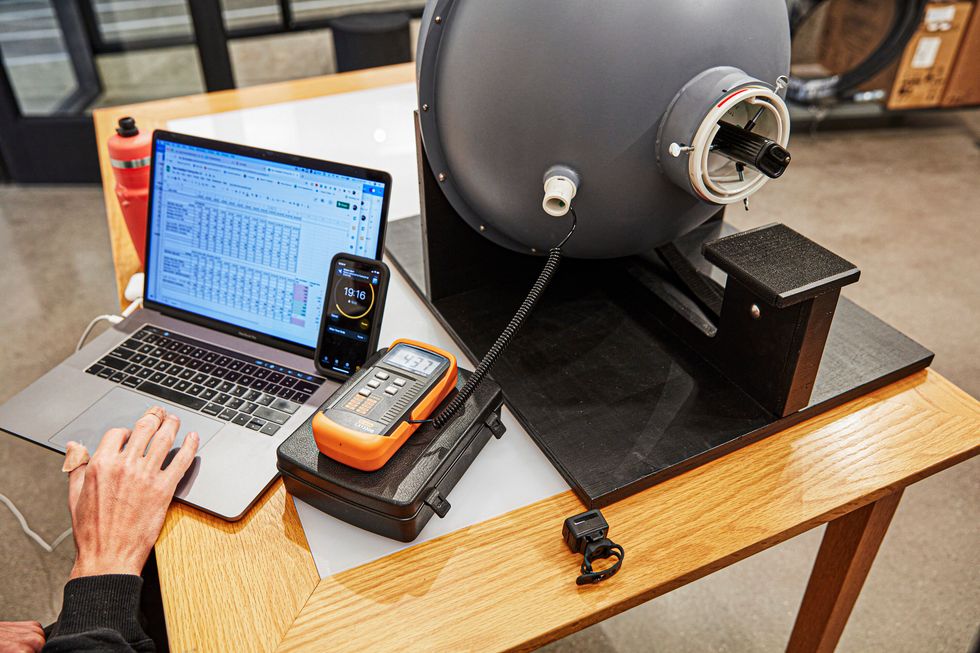
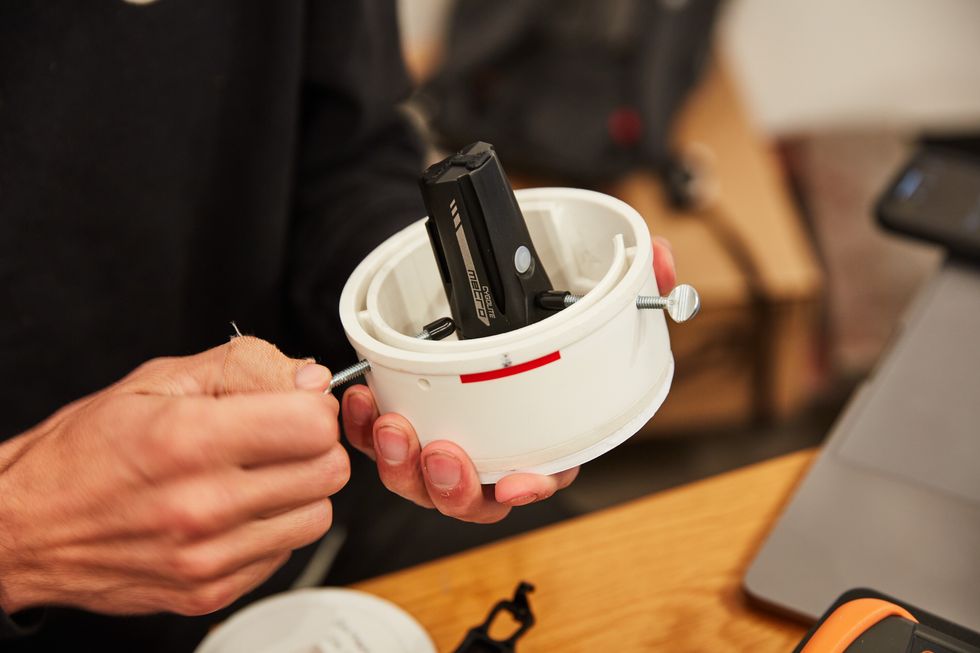
In addition, I relied on the prior extensive testing and research of the Bicycling Test Team, which includes Deputy Editor Tara Seplavy, Senior Test Editor Matt Phillips, Test Editor Dan Chabanov, and Senior Reviews Editor Bobby Lea. They dedicated many hours to riding in the dark with lights strapped to their bars and helmets.
They mixed commuting miles with night rides on mountain bike trails and the road, using the lights for intended and unintended purposes. Additionally, the test team gauged battery life based on real-life usage, did their best to shake the lights loose to determine how well their mounts worked, and evaluated the effectiveness of the beam pattern.
The Test Team also put several popular lights through extensive lab testing using an integrating sphere. This hollow instrument has a white reflective interior that scatters light evenly inside, allowing the editors to take accurate measurements of that light using a light meter.
Rear the Full Review From Our Lab Testing on Lumen Ratings


Our Full Bike Lights Reviews
Best Daytime Lights
Trek Ion 200 RT / Flare RT Light Set

Pros
- Increases visibility dramatically, even in daylight
- Can be controlled from a cycling computer
Key Specs
| Claimed run time | 1.5 hours (front on high); 4.5 hours (rear on high); 14.5 hours (front on low); 13.5 hours (rear on low); 30 hours (front on flashing); 15 hours (rear on flashing) |
|---|---|
| Lumens | 200 |
| Mount | Handlebar or helmet (front); multiple (rear) |
| Modes | 3 each |
Bontrager introduced the Ion 200 RT and Flare RT daytime-running lights seven years ago, and they still hold up as one of the best. Three members of the Bicycling editorial staff, Senior Test Editor Matt Phillips, Test Editor Dan Chabanov, and Senior Reviews Editor Bobby Lea have used these regularly for years. In particular, Chabanov and Phillips site the superior battery life in the Ion 200 RT as the primary reason that light lives on their handlebars.
The best part about this light set is its incredible visibility – both the Ion 200 RT and Flare RT are claimed to be visible from 1.25 miles away. With multiple steady modes, flash modes, and the ability to control them from your cycling computer, these lights are user-friendly and rider-focused. It’s worth noting that these lights are very small and nondescript, albeit as long as you don’t have them turned on, so your bike can still look cool with front and rear lights in place. Whether you are a commuter, racer, or just love to ride bikes from time to time, these lights are a great way to enhance your visibility on the road.
Be sure to push the rubber charging port cover firmly back in place when removing the light from the charger. Should you forget, road spray can get into the USB port and short out the light. It’s an expensive set, but it stands the test of time.
NiteRider has gained a reputation for making some of the most durable, practical, and long-lasting lights, and the set comprised of the Lumina front light with the Sabre rear light is a formidable combination.
The construction of the front lights consists of a fiberglass reinforced nylon housing featuring aluminum heatsink fins to keep the Li-Ion battery from overheating. It makes for a durable design. A low battery indicator is built into the power button: blue indicates a good battery level while red indicates that battery has less than 20 percent remaining.
The solid front mount holds onto handlebars securely over all types of terrain. The rear light has a standard quick-release strap or a clip that can be used to turn the light into a wearable. The Sabre rear light features side LEDs for 180 degrees of visibility. The only knock against this set is that, while it meets dust and water-resistance standards, it is not specifically waterproof like other lights.
The Knog Plus has a svelte design, which makes this pair of lights highly versatile. With its integrated clip, you can remove the light from the magnetic mount and then attach it to your shirt, shorts, or socks. Of course, with the included strap it fits nicely around a seat post and handlebar, too. There’s also no charging cable required because the lights plug directly into USB ports. Waterproof, compact, and inexpensive, this is more than just a bike light—wear these on runs, night walks, or anywhere there’s safety in being seen.
We also love the Knog Frog light set. The set costs $15 more than the Plus, but the tradeoff is a pair of small and discreet lights that attach via a silicone strap. They’re easy to attach to awkward tube shapes and visually unobtrusive (when not in use).
Best Budget Light
Cygolite Metro Plus 800
Pros
- Low drop off in lumens
- Good beam pattern
Cons
- Limited run time on high setting
Key Specs
| Claimed run time | 1.5 hr (boost); 6.5 hr (low) |
|---|---|
| Lumens | 800 |
| Mount | Handlebar |
| Modes | 9 |
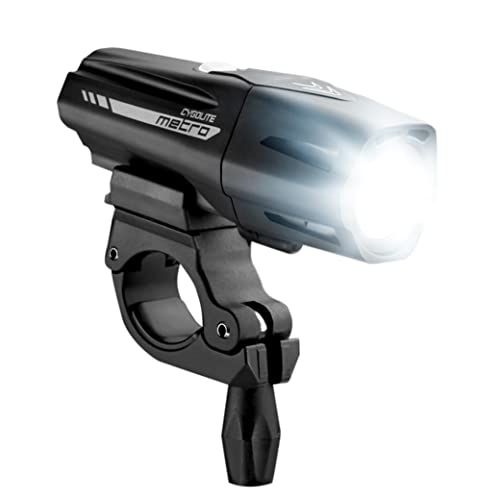
The Metro Plus 800, one of the less expensive lights tested, has a small falloff from its peak output, dropping just 9.8 percent over 30 minutes. The beam pattern is very close to a spot, but there’s enough light thrown to the side to feel comfortable using this light on the road.
The Metro Plus would be a good backup or helmet light (paired with a wider beam on the handlebar) for mountain biking. The main downside of the Metro Plus is its short run time: only an hour on its max output setting.
The KTV Drive Pro+ earns its place on this list—and on our bikes—for its great balance of price, performance, and ease of moving it from bike to bike. While it takes up a bit more space than the Bontrager Flare RT or Cygolite Hotshot, that’s a small tradeoff for a powerful rear light with multiple flash and pulse modes designed to effectively catch the attention of approaching traffic.
It mounts with a sturdy silicone strap that, according to Senior Reviews Editor Bobby Lea, has shown no signs of dry rot or stretching—even after years of use. One of his favorite features is its versatility: it fits just as securely on the aero seat post of his Cervelo S5 as it does on the handle of the Thule Chariot Sport he pulls when riding with his kids.
Charging is simple thanks to an integrated USB stick, meaning no extra cords to keep track of. The only drawback? When plugging it into a USB tower—like the ones we use to juice up our endless lineup of bike gadgets—it can block adjacent ports.
Our only gripe is a minor one: It can be tricky to distinguish between flash modes, and picking the wrong one can reduce battery life from a max of 10.5 hours (Day Flash) to just 4 hours (Flash mode). But that only comes into play on our longest rides.
For a slight up charge, check out the KTV Pro+ Ai Alert. It brings all of the features we love about the KTV Drive, but adds what Lezyne calls its Ai Alert brake sensing technology. In plain english, that means it detects when you’re braking and automatically changes the light to a rapid 150-lumen flash “brake light” mode.
Cheapest Headlight
Gyhuego USB Rechargeable Bike Light

Key Specs
| Claimed run time | 10 hr |
|---|---|
| Lumens | 3000 |
| Mount | Handlebar |
| Modes | 3 |
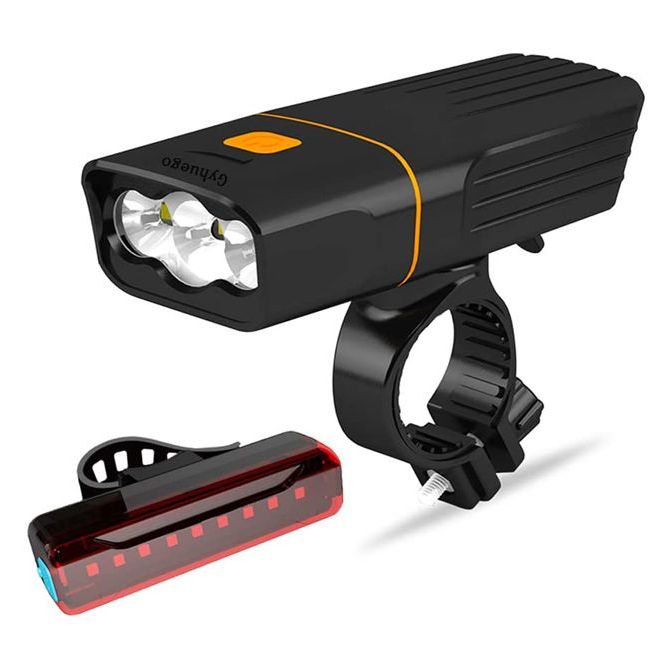
This budget light found on Amazon makes a bold claim: 10 hours of run time at 3,000 lumens. We were unable to verify the lumens claim, but in using this light we can attest to the fact that it is incredibly bright and the battery life—10 hours on full power—is astounding.
Once battery life gets low, just after the 10-hour mark, the light switches to a lower setting to save power but keeps running for nearly four more hours. We haven’t used it long enough to know how the battery stands up to repeated charging cycles, so check back for updates. The set includes a taillight, which leaves something to be desired in terms of visibility, but for $23 it’s hard to knock it.
Best Battery Life
NiteRider Lumina OLED 1200 Boost Headlight

Pros
- Battery saver function shifts light to lowest setting when juice is low
- Toggling between light modes can get you nearly two hours of light
Cons
- Slightly heavy
Key Specs
| Claimed run time | N/A |
|---|---|
| Lumens | 1200 |
| Mount | Handlebar |
| Modes | 9 |
Commuting, mountain biking, and gravel riding—the rechargeable Lumina is good for all three. At full power, it blasts out 1,200 lumens in a widespread beam that adequately illuminates the road or trail up to 20 yards ahead. Its OLED screen shows the remaining battery life for whichever of the five light levels and four daylight flash modes (from 275 to the max 1,200 lumens) you’re using.
When the battery gets close to empty, the Lumina automatically shifts down to the lowest setting to preserve juice. In testing, the battery indicator was found to be pretty accurate, and in twilight and post-sunset riding conditions, we were able to get almost two hours of life by making good use of the various settings to save power. After 15 months of consistent use, albeit less in the summer, this light is still one of our favorites.
You’d be hard-pressed to find a more feature-rich taillight than the 50-lumen, USB-rechargeable, $30 Hotshot. Two buttons allow you to toggle between customizable blinking and strobe modes, as well as six programmed daytime and nighttime modes: steady, zoom, triple flash, random flash, DayLightning (bright flashes to call attention to you when the sun’s up), and SteadyPulse (a beam that gradually changes intensity to keep motorists alert at night).
Though the Cygolite is intended for commuter use, we found the clamp is strong enough to survive bumping and jostling over rocks and roots during mountain bike rides, too. And after accidentally sending it through the wash, we can vouch for its water resistance.
If you want to see every pebble on the path, even on the darkest of nights, the ultra-bright Fenix BC26R is the right option. It boasts a beam that can reach up to a claimed 184 yards with the 100-degree-wide angle flood beam. The durable aluminum construction adds some weight, but it more than makes up for it in terms of the durability and weather-proofness. Given these two attributes, it’s no wonder that this is one of the most popular lights in the world of bikepacking and ultra-racing.
It also helps that the battery is separate from the light itself which means you can bring multiple batteries and swap them out. All told, this is one of my favorite lights, because the construction, output, and battery life are better than any other bike light I’ve used.
Best for Mountain Biking
Gloworm X2 Adventure

Pros
- Interchangeable lenses
- Remote control
- Battery and light are separate units
Key Specs
| Claimed run time | 2 hr (at max) |
|---|---|
| Lumens | 2000 |
| Mount | Helmet or handlebar |
| Modes | 4 |
The 2000-lumen, 2-LED X2 Adventure offers several amazing features making this a great choice for nighttime mountain biking adventures. The light comes with interchangeable lenses that allow you to control your beam pattern: set it up as a floodlight for seeing as much as possible around you, a spotlight for seeing further down the trail, or a combination of both.
There is a wireless remote control that can be handlebar mounted; the remote features two buttons that can be configured to control multiple lights. The light can be mounted on either your handlebar or your helmet. Finally, the battery is separate from the light itself, so if you mount the lights on your helmet, you can mount the battery to the back of your helmet, using the short cord, or with the longer cord you could store the battery in a pack or pocket. It’s not cheap, but if you ride trails in the dark, this light will bring you hours of nighttime fun.
Best Small Light
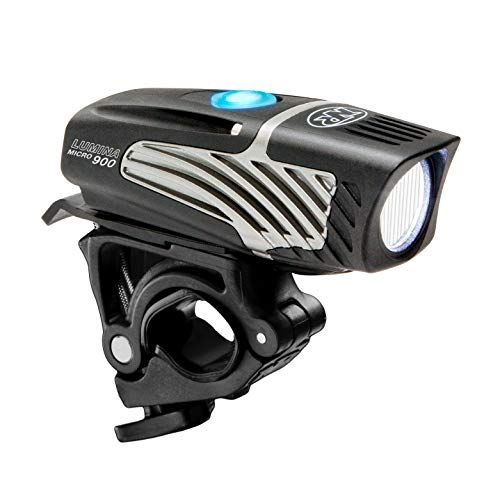
NiteRider Lumina Micro 900
Pros
- Compact size
- Lightweight
Cons
- High lumen drop off rate
Key Specs
| Claimed run time | 2 hr (high); 11hr (low or flashing) |
|---|---|
| Lumens | 900 |
| Mount | Handlebar |
| Modes | 5 |
The Micro 900 is a simple light that packs a lot of great features into a compact design. On a mountain bike, the Micro 900 should be combined with another light, either bar- or helmet-mounted. It can also work as a backup light; it’s so small that it’s not hard to carry.
Though the Micro 900 is too small to be your only light for trail riding, you could buy four of them (and still have money left) for the price of our top-rated Gloworm X2 Adventure mountain biking light. So if your budget is tight and you want to get into the woods at night, grab two of these—one for the bar and one for your helmet—and you’re good to go. On the road, we found it to be very useful as our main light source riding through a mix of well-lit city streets and dimmer suburban lanes.
Best Safety Features
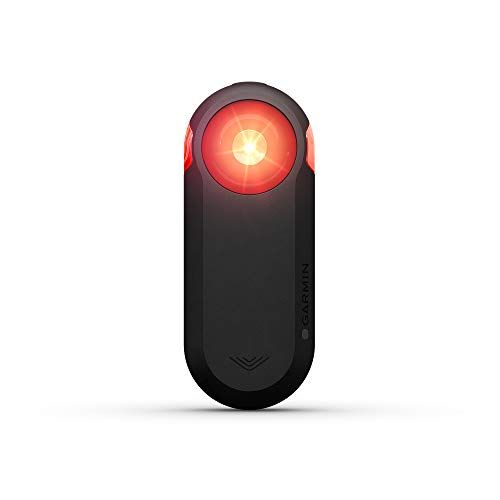
Garmin Varia RTL515
Pros
- Alerts rider to approaching vehicles
Key Specs
| Claimed run time | up to 16 hours in day flash mode, up to 6 hours in solid mode |
|---|---|
| Lumens | 65 |
| Mount | Seatpost |
| Modes | 3 |
The Varia has all the typical features of a taillight: solid, night flash, and day flash modes; 220 degrees and up to a mile of visibility; and a slim, vertical design that easily attaches to a seatpost. So why the high price? It can also warn you of approaching vehicles.
Using a radar display unit (for which you’ll have to pay an extra $160) or a compatible Garmin device (the list is endless), the Varia senses vehicles approaching from behind and sends a visual and audible alert to your device. It also automatically adjusts its blinking pattern to alert drivers of your presence. It’s not as useful on busy roads when there are always cars around, but it provides additional comfort and awareness in areas with intermittent traffic, especially as quieter hybrid and electric cars become more prevalent.
While the Varia has been one of the most popular choices for years, the new Trek CarBack Light is also worth considering. On testing, CarBack gave almost no false positives, and the light is very bright. The battery light indicator is a nice touch. While Trek claims the device will detect cars up to 240 meters away, testing proved less consistent results.
This powerful little light caught our eye at Sea Otter thanks to its premium construction—the body and mount are CNC-machined aluminum. It’s the most expensive tail light on this list that doesn’t include radar, but it’s also the only one not made entirely of plastic. It delivers up to 250 lumens and promises 15 hours of run time in Day Flash mode, with Lezyne claiming up to 60 hours on its lowest setting.
One feature we really like is the clamp-style mount that attaches to saddle rails, which tucks the light neatly out of the way. That said, it will pose a challenge for riders who use saddle bags, as you can’t have both this light and a saddle bag.
What intrigues us most is Lezyne’s “Ai Alert” brake-sensing technology. An onboard accelerometer detects sudden deceleration and automatically switches the light into a 250-lumen “brake light” flash mode. This feature is also found in the KTV Pro+ Ai Alert mentioned earlier. While we haven’t had the chance to test that model yet, we do have the Saddle Ai Alert 250 in hand. Stay tuned—we’ll report back once we’ve had time to see whether it lives up to its premium price tag.
What to Consider in a Bike Light
When choosing a light, first determine the primary usage. To be seen, a front and rear blinker set will usually be sufficient. If you typically commute to work outside of daylight hours when the light is low, these are a must-have. Riding mostly in urban settings? Choose a light with enhanced side visibility which helps you to be seen at intersections and when coming out of road junctions.
For trails, bright front lights are most important, as is runtime. When mountain biking, the combination of a bar-mounted lamp and a helmet-mounted light will both help you to see through corners and to more easily identify rocks in the shadows.
On singletrack, while brighter is often better, you may also want to consider the beam shape. Many bike lights have a roughly round beam, however, a more horizontal or squared-off beam has its advantages. Primarily, you’re not wasting energy and beam power illuminating the trees above you or other elements that are less relevant to seeing ahead.
Also factor in if you’ll often be swapping out the light between bikes. If so, check out a strap-style mount. It has the additional benefit of fitting on bars that aren’t round, unlike bracket-style mounts. Another option are lights with a quick-release mount.
Lights are bound to take a beating if they’re going to be used often, and if they’re subjected to the elements. Look for lights with weatherproof seals and solid construction, as well as non-slip attachments. You’ll also want an easily removable light body for charging and theft prevention, battery indicator lights, or sounds to alert you when it’s time to recharge the system. Lastly, look for a light with an IPX water-resistance rating of 5 or higher (anything lower and a splash, spray, or spritz is as much as they can handle). All of the lights tested in this article are rechargeable via some variety of a USB port.
Here are the major factors to look at when choosing a bike light.
FAQ: Our Expert Checks in with Trek for More Bike Light Insights
The Expert: I’ve been riding and racing all manner of bikes for over 30 years. I use some kind of light on almost every ride, whether it’s for training, commuting, or at night. I also do a lot of bikepacking, so lights are a big part of seeing and being seen out on the roads and trails I traverse.
While dynamo hubs and lights are the ultimate in self-sufficiency—they give you always-on illumination minus the need to charge—the latest lights with long-lasting batteries are a close second. Formerly the managing editor of VeloNews magazine, I now guide gravel cycling and bikepacking tours with my company Alter Exploration. Follow me on Instagram at @chrisjustincase.
I also spoke with Alex Applegate of Trek Bicycles, which has been one of the leaders in bike lights for years. He helped us better understand the effectiveness of lights based on the research, as well as what the future might hold for safety features within lights.
Chris Case, former managing editor of VeloNews magazine, has been riding, racing, and adventuring by bike for nearly 30 years. His cycling pursuits have taken him to destinations across the U.S. and Europe, Taiwan, Costa Rica, Israel, and beyond. He has stood on the podium at several cyclocross national championships, and is a silver medalist at master’s cyclocross worlds. Today he guides adventurous gravel cycling and bikepacking tours through his company, Alter Exploration.


